






How to Choose the Perfect Sofa for Your Living Room: Complete Guide

The sofa is the undisputed centerpiece of any living room. It is where you unwind after a demanding workday, host friends on weekends, and gather with family for movie nights. Because a sofa is both a substantial financial investment and the visual anchor of your room, buying the wrong one can lead to years of regret—whether it cramps your entryway, clutters your walking path, or proves uncomfortable after twenty minutes of sitting.
This comprehensive buying guide walks you through every critical step—from precise room measurements and upholstery comparisons to popular design styles and long-term care routines—so you can invest with total confidence.
1. How to Measure Your Space and Entryways (Before You Buy)
A surprisingly common mistake when buying furniture is falling in love with a showroom model, only to realize on delivery day that it either dwarfs your room or cannot fit through the front door. Measuring both the room footprint and the delivery path is vital.
Step 1: Mapping the Living Room Footprint
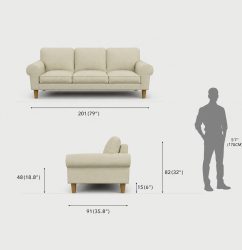
- The Masking Tape Trick: Find the manufacturer’s dimensions (Length × Width × Height) of the sofa you want. Outline that exact footprint on your floor using painter’s masking tape or newspaper sheets. This allows you to walk around it and immediately feel whether it restricts movement.
- Maintain Walking Clearance: Always leave at least 30 to 36 inches (75–90 cm) of open walkway around the sofa for natural traffic flow.
- Coffee Table Clearance: Leave 14 to 18 inches (35–45 cm) between the sofa seat edge and your coffee table. This gives you plenty of legroom while keeping drinks within comfortable reach.
- Distance to TV: As a standard rule of thumb, position your sofa roughly 8 to 10 feet (2.4 to 3 meters) away from your main entertainment unit for comfortable viewing.
Step 2: Checking the Delivery Path (“The Doorway Dilemma”)
A sofa must travel from the delivery vehicle into your home. Measure every transition point along the way:
- Building Elevator & Stairwell: Check the elevator door width, ceiling height, and diagonal depth. If using stairs, measure the turnaround width on stair landings.
- Main Front Door: Measure the interior door frame width at its narrowest point (subtracting 1 inch if the door does not swing completely open).
- Hallway Corners: Check if the sofa must make a sharp 90-degree turn in a narrow corridor.
- Pro Tip: If your entry path is tight, choose a sofa with removable wooden legs, detachable bolt-on armrests, or a modular split-frame design.
2. Material Breakdown: Fabric vs. Leatherette vs. Wooden Frame
The frame and outer upholstery determine the longevity, comfort, and maintenance of your sofa.
| Upholstery / Frame Type | Best Suited For | Key Advantages | Things to Consider |
| Fabric (Cotton / Linen / Polyester) | Everyday family living, warm or humid climates | Highly breathable, soft to the touch, endless textures and colors | Susceptible to liquid spills and pet hair; requires routine vacuuming |
| Leatherette (Faux / PU Leather) | Modern, sleek spaces, busy dining areas | Easy to wipe clean, spill-resistant, hypoallergenic, modern look | Can feel warm or sticky in humid weather; sensitive to sharp pet claws |
| Solid Wooden Frame (Sheesham / Teak / Sal) | Long-term investment, traditional & transitional decor | Unmatched structural durability, warp-resistant, termite-treated | Heavier footprint; typically paired with structured removable cushions |
Fabric Upholstery
High-grade fabric weaves (such as heavy polyester blends or textured linen-cottons) offer unmatched daily coziness. They stay neutral in temperature year-round and suit lounging. Look for fabric with a high Martindale rub count (above 20,000 rubs) for heavy domestic use.
Leatherette Upholstery
High-grade synthetic leather delivers a sleek, luxurious executive look at a fraction of the cost of genuine leather. Spilled coffee or soda wipes clean in seconds with a damp microfiber cloth, making it convenient for homes with active toddlers or frequent snacking.
Solid Wood Construction
Whatever fabric you choose, inspect the internal skeleton. Kiln-dried hardwood (such as Sal, Sheesham, or Teak) ensures the frame resists warping and joint loosening over years of daily pressure. Avoid particleboard or untreated softwood frames that sag under regular load.
3. 4 Popular Sofa Styles: Which One Fits Your Lifestyle?
1. The Sectional L-Shape Sofa
The L-shaped sectional is ideal for open-plan living rooms and medium-to-large floor plans. It creates a natural room divider between your living and dining areas without requiring a physical partition wall. The extended chaise lounge lets you kick your feet up during weekend movie marathons while providing generous seating for family gatherings.
- Best For: Larger families, frequent hosts, and squarish living rooms.
- Layout Tip: Double-check whether your room requires a left-aligned or right-aligned chaise so it does not block balcony doors or hallways.
[VIEW MATCHING SOFA PRODUCT HERE]
2. The Minimalist 3-Seater Sofa
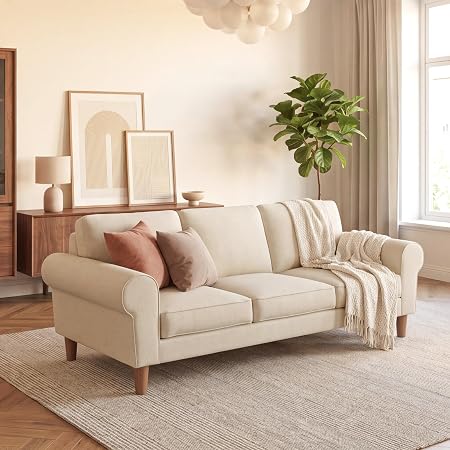
The straight 3-seater sofa is the undisputed workhorse of modern apartments. Featuring crisp horizontal lines, clean profiles, and raised legs, it gives compact spaces a light, uncluttered feel. It provides comfortable seating for three adults without dominating the entire room.
- Best For: Compact city apartments, minimalist aesthetics, and narrow living rooms.
- Styling Tip: Pair it with a complementary accent chair or an ottoman to add flexible seating without cluttering the floor.
[VIEW MATCHING SOFA PRODUCT HERE]
3. The Functional Sofa-Cum-Bed
If you frequently host overnight guests but lack a dedicated guest bedroom, a sofa-cum-bed is an invaluable space-saver. Modern click-clack and pull-out hydraulic mechanisms transform a stylish 3-seater into a supportive double bed in less than thirty seconds.
- Best For: Studio apartments, guest rooms, home offices, and multipurpose rooms.
- Buying Tip: Look for models featuring high-resilience (HR) foam with a density rating of 32 or higher to prevent premature center dipping.
[VIEW MATCHING SOFA PRODUCT HERE]
4. The Ergonomic Recliner Sofa
For those prioritizing physical relaxation, nothing matches an ergonomic recliner. Equipped with adjustable lumbar cushions, extendable footrests, and smooth tilt mechanisms, recliners distribute your body weight evenly to take pressure off your lower back and knees.
- Best For: Dedicated media dens, senior family members, and ultimate relaxation.
- Clearance Tip: Account for wall clearance. Ensure you have at least 4 to 6 inches of space between the sofa back and the wall so the backrest can recline fully.
[VIEW MATCHING SOFA PRODUCT HERE]
4. Maintenance and Cleaning Tips for Long-Lasting Durability
A quality sofa should comfortably serve your home for seven to ten years or more. A few consistent maintenance habits will preserve its shape, fabric color, and cushioning:
- Vacuum Weekly: Dust and food crumbs settle into crevices and cushion fibers, acting like fine sandpaper that wears down fabrics. Use the soft brush attachment of your vacuum cleaner along seams and under loose cushions every week.
- Blot, Never Rub Spills: If liquid spills on fabric upholstery, blot immediately with a clean, dry white cotton towel or paper towel. Never rub vigorously, as rubbing forces the stain deeper into the foam padding and spreads the mark.
- Condition Leatherette Surfaces: Keep faux leather out of harsh direct sunlight to prevent drying and surface cracking. Wipe it monthly with a mildly damp microfiber cloth and apply a specialized vinyl/leatherette conditioner every six months.
- Rotate and Fluff Cushions: If your sofa features removable seat or back pillows, rotate and flip them every two to three weeks. This ensures even distribution of body weight and prevents permanent body impressions from forming in your favorite spot.
- Protect the Frame from Moisture: When mopping your living room floor, prevent wet mops from repeatedly striking the sofa’s wooden legs to preserve the varnish and prevent moisture absorption.
Summary: Your Quick Buyer’s Checklist
Before making your final purchase, run through this quick checklist:
- [ ] Room footprint taped out with at least 30 inches of walking clearance.
- [ ] Elevator, stairwells, and front door measured against the sofa’s largest dimensions.
- [ ] Frame material confirmed as seasoned hardwood or high-strength metal.
- [ ] Upholstery chosen to suit your home’s climate, cleaning habits, and pets.
- [ ] Cushion density and seat depth tested for proper posture support.
